
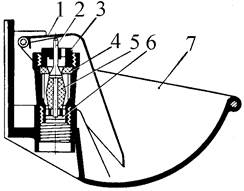
Индивидуальные и групповые автопоилки: для животных. Схемы и конструкции...
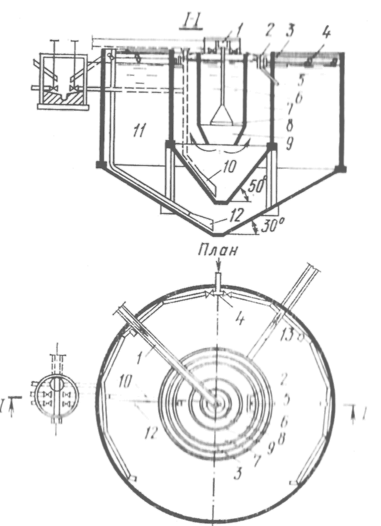
Типы сооружений для обработки осадков: Септиками называются сооружения, в которых одновременно происходят осветление сточной жидкости...
Индивидуальные и групповые автопоилки: для животных. Схемы и конструкции...
Типы сооружений для обработки осадков: Септиками называются сооружения, в которых одновременно происходят осветление сточной жидкости...
Топ:
Комплексной системы оценки состояния охраны труда на производственном объекте (КСОТ-П): Цели и задачи Комплексной системы оценки состояния охраны труда и определению факторов рисков по охране труда...
Оснащения врачебно-сестринской бригады.
Техника безопасности при работе на пароконвектомате: К обслуживанию пароконвектомата допускаются лица, прошедшие технический минимум по эксплуатации оборудования...
Интересное:
Мероприятия для защиты от морозного пучения грунтов: Инженерная защита от морозного (криогенного) пучения грунтов необходима для легких малоэтажных зданий и других сооружений...
Инженерная защита территорий, зданий и сооружений от опасных геологических процессов: Изучение оползневых явлений, оценка устойчивости склонов и проектирование противооползневых сооружений — актуальнейшие задачи, стоящие перед отечественными...
Распространение рака на другие отдаленные от желудка органы: Характерных симптомов рака желудка не существует. Выраженные симптомы появляются, когда опухоль...
Дисциплины:
 2019-12-27 2019-12-27 |
 419 419 |

из
5.00
|
Заказать работу |
Содержание книги
Поиск на нашем сайте
|
|
|
|
1. It indicates the long or diphthongal sound value of the preceding vowel letter:
| bite | note | theme |
2. It fixes the sound value of the letters “c”, “g” and the diagraph “th”:
| since | large | breathe |
3. In some words it serves both the functions:
| ice | nice | rage | bathe |
4. It comes after “l” or “r” preceded by another consonant letter to indicate the syllabic character of [l] and vocalic [r]:
| table | noble | centre | theatre |
5. It follows the letters “v”, “u”, “i”, “o”, “s”, “z” which are seldom or never word-final:
| give | league | freeze | dense | die | toe | blue |
6. I serves to distinguish homophones and words which look alike but differ in meaning and pronunciation:
| step – steppe [step] | please – pleas [plJz] |
| do – doe [dqu] | moral – morale [mq'rRl] |
7. It may be a part of a diagraph or triagraph:
| care | fire | cure |
Rule I. The final mute letter “e” is usually dropped before a suffix beginning with a vowel letter:
| fame – famous | amuse – amusing |
| love – lovable | guide – guidance |
Note: 1. “e” is retained to show pronunciation in words ending in -ce, -ge. “e” is needed to preserve the sound of the soft “c”, “g”; but if the suffix begins with “i” the mute letter “e” is dropped:
| change – changing – changeable |
| notice – noticing – noticeable |
2. “e” is also kept after “o”:
| toe – toeing | canoe – canoeing |
| shoe – shoeing | tiptoe – tiptoeing |
3. Verbs ending in “-ie” change the “ie” into “y” before “ing” to avoid a double “i”:
| die - dying | tie - tying | lie - lying |
4. Double “e“ is retained before all suffixes except those beginning with “e” (-ed, -er, -est)
| see – seeing | agree – agreeable |
5. Rule I is not strictly observed in the case of monosyllabic words when they are likely to be misread:
| likeable | or | saleable |
| likable | salable |
Rule II. The final mute letter “e” is retained before a suffix beginning with a consonant (to keep the pronunciation):
| safe - safety | whole - wholesome | care - careful |
| Exceptions: | due – duly whole – wholly true – truly nine – ninth argue - argument |
Exercises
1. Write the “ing-form” of the following verbs:
| leave | face | tiptoe | give | place | see |
| use | save | wake | shake | promise | agree |
| lie | raise | unite | clothe | come | strike |
| ride | rise | take | bite | have | place |
| canoe | tie | make | love | prepare | die |
2. Write the initial form of the following words and give all the necessary explanations:
Abridging, amusement, arrival, bluish, changeable, continuous, creation, died, duly, dyeing, dying, freest, icy, nervous, tied, tiptoed, truly, wholly, valuable.
3. Write the derivatives for the following words adding the suffixes:
| -able | -ous | -ful | -er |
| change | fame | hope | trade |
| notice | nerve | hate | dance |
| advise | courage | use | strike |
| trace | continue | taste | love |
| agree | fury | peace | skate |
| move | glory | care | believe |
| value | envy | grace | lecture |
| -ment | -ly | -less | -ance |
| announce | true | hope | guide |
| acquire | whole | use | grieve |
| improve | idle | care | ignore |
| excite | rare | noise | endure |
| commence | private | tire | resemble |
| agree | live | age | continue |
| achieve | large | sense |
4. Write all forms and derivatives for the following words:
| active | care | courage | close | hope | move | strange |
| agree | change | create | die | lie | notice | value |
5. Insert the letter “e”where necessary:
a gentl_ breez_
a hop_less cas_
a grac_ful danc_er
a continu_ous drizzl_
a compl_t – ignor_ance
an entir_ly wrong argu_ment
the scen_ of a fam_ous battle
ly_ing without mov_ment
a tru_ly grat_ful and respons_iv_ audienc_
6. Add the suffixes given in brackets to the underlined words:
1. I may as well mention here that she made an advantage (-ous) match with a wealthy, worn-out man of fashion. 2. It wasn’t from that dinner he remembered her, it was from notice (-ing) her in the street. 3. Glanc (-ing) at his companion, he wondered if she remembered it. 4. He knows the boy is very courage (-ous) but he is also young. 5. But most people are afraid of face (-ing) this part of their nature. 6. The mechanic who is extremely knowledge (-able) about any kind of machinery, knew exactly how to get the gate open. 7. One day he was called to the manager’s room, due (-ly) reprimanded. 8. She learned many different steps, and even learned the art of tiptoe (-ing).
7. Find and correct the misspelt words:
Lying, eyeing, judgeing, agred, useful, duly, wholely, argument, changing, careful.
8. Write in English the following words:
Ценный, надежный, предпочтительный, восхитительный, изменчивый, заметный, несогласный, управляемый.
COMPOSITION EXERCISE.
Complete the following passage. Keep to the first person and the past tense.
I was walking along a country lane when a car passed me, travelling very fast, skidded at the next comer and overturned....
Affixation
(Prefixation and Suffixation)
I. Prefixation
A prefix is a word-building morpheme preceding the stem. It modifies the lexical meaning of the stem:
polite – im polite fill - re fill
Some prefixes may form a different part of speech from the original word. When added to a verb-stem, they change an intransitive verb into a transitive verb:
wit, n. - out wit, v.; little, adj. - be little, v.
Thus, a prefix always has lexical and sometimes grammatical meaning.
Negative prefixes
The group of negative prefixes is numerous. They give the derived word negative, reverse or opposite meaning.
| Un- | a negative prefix may begin with a vowel or consonant. For the biggest part of adjectives | · unable — неспособный, · unaware — неосведомленный, · uncertain — неуверенный, · unclear — неясный, · unfriendly — недружелюбный, · unhelpful — бесполезный, · uninformed -неосведомленный, · unknown — неизвестный, · unpleasant — неприятный, · unpredictable – непредсказуемый | ||
| In- | a negative prefix can begin with a vowel mainly a/ac (except i or u) or a consonant. | · Inaccessible — недостижимый, · Inaccurate — неточный, · Inadequate — неадекватный, · Incapable — неспособный, · Incomplete — незавершенный, · Incredible – невероятный. Исключения: indefinite, inevitable, infinite, inflexible, informal, insecure, insignificant, invalid, invariable, invisible, involuntary. | ||
| Il- | a negative prefix always begin with the letter l. | · Illegal — нелегальный, · Illegible – нечеткий, неразборчивый, · Illiterate — неграмотный, · Illogical – нелогичный Исключение: disloyal | ||
| Ir- | a negative prefix always begin with the letter r. | · Irrational — нерациональный, · Irregular — неправильный, · Irrelevant — неуместный, · Irreparable — неисправимый, · Irresistible — неотразимый, · Irresponsible — безответственный, · Irreversible – необратимый. | ||
| Im- | a negative prefix always begin with the letter m or p | · Immature — незрелый, · Impatient — неспокойный, · Imperfect — неидеальный, · Impossible — невозможный, · Imprecise – неточный. | ||
| Dis- | a negative prefix may begin with a vowel or a consonant Necessary to learn by heart | · Disagreeable – неприятный, · Dishonorable – позорный, · Dishonest — бесчестный, · Disloyal – нелояльный; · Distasteful – противный, · distrustful — недоверчивый. | ||
| Non- | a negative prefix may begin with a vowel or a consonant. Necessary to learn by heart | · Nonexistent — несуществующий, · Nonmetallic – неметаллический, · Nonpartisan — беспартийный, · Nonresident – не проживающий здесь. | ||
| Un- | Rarely used with verbs, giving meaning delete | · Unscheduled – удалить из расписания · Unfriend – удалить из друзей | ||
| De- | a negative prefix with reverse meaning | · Deactivate — деактивировать, · Decode — декодировать, · Decommission — списывать, · Decompose — разбирать, · Deconstruct –разбирать, · Decontaminate — дезинфицировать, · Decrease — уменьшать, · Deform — деформировать, · Derail – сходить с рельсов. | ||
| Dis- | a negative prefix may begin with a vowel or a consonant | · Disagree – не соглашаться, · Disfigure – обезображивать, · Disinfect – дезинфицировать, · Disinherit – лишать наследства, · Disintegrate – дезинтегрировать, · displease - не нравиться, · distrust – не доверять. | ||
| Mis- | Meaning wrong | · Misdiagnose — поставить неверный диагноз, · Misinform — неправильно информировать, · Misinterpret — неверно истолковывать, · Mislead — вводить в заблуждение, · Misplace — поставить не на то место, · Misspell — делать орфографические ошибки, · Mistake – ошибаться, · Misunderstand — неправильно понять. | ||
The prefix “in-“ (its variants -il, -im, ir) is usually added to adjectives (in accordance with the rules of assimilation) giving negative or opposite meaning. (The Russian prefix - “He-“).
convenience – in convenience
logical – ill ogical
moral – im moral
rational – ir rational
The prefix “de-“ gives the affixed word the following meanings: deprive of, rid of, rid of the character of; reverse, undo (what is denoted by the verb):
code – de code fame – de fame
throne – de throne form – de form
The prefix “ dis-“ gives the affixed word the opposite or negative meaning, the meaning of “the reverse of”:
| advantage – dis advantage | arm – dis arm |
| content – dis content | agree – dis agree |
Exercises
|
|
|

Своеобразие русской архитектуры: Основной материал – дерево – быстрота постройки, но недолговечность и необходимость деления...
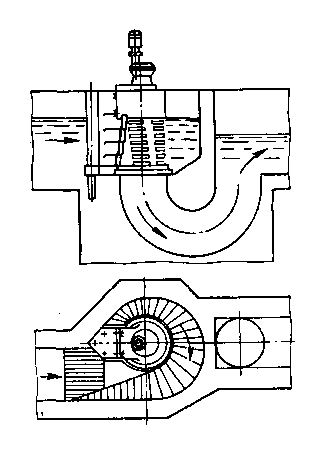
Состав сооружений: решетки и песколовки: Решетки – это первое устройство в схеме очистных сооружений. Они представляют...
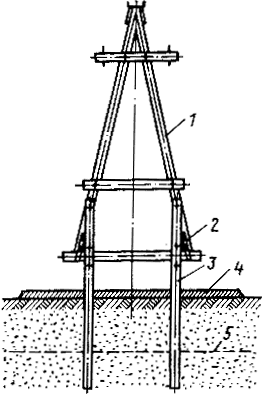
Особенности сооружения опор в сложных условиях: Сооружение ВЛ в районах с суровыми климатическими и тяжелыми геологическими условиями...

Историки об Елизавете Петровне: Елизавета попала между двумя встречными культурными течениями, воспитывалась среди новых европейских веяний и преданий...
© cyberpediasu.com 2017-2026 - Не является автором материалов. Исключительное право сохранено за автором текста.
Если вы не хотите, чтобы данный материал был у нас на сайте, перейдите по ссылке: Нарушение авторских прав. Мы поможем в написании вашей работы!

