
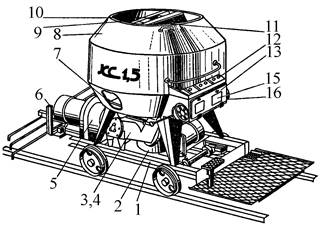
Кормораздатчик мобильный электрифицированный: схема и процесс работы устройства...

Семя – орган полового размножения и расселения растений: наружи у семян имеется плотный покров – кожура...
Кормораздатчик мобильный электрифицированный: схема и процесс работы устройства...
Семя – орган полового размножения и расселения растений: наружи у семян имеется плотный покров – кожура...
Топ:
Характеристика АТП и сварочно-жестяницкого участка: Транспорт в настоящее время является одной из важнейших отраслей народного хозяйства...
Выпускная квалификационная работа: Основная часть ВКР, как правило, состоит из двух-трех глав, каждая из которых, в свою очередь...
Методика измерений сопротивления растеканию тока анодного заземления: Анодный заземлитель (анод) – проводник, погруженный в электролитическую среду (грунт, раствор электролита) и подключенный к положительному...
Интересное:
Распространение рака на другие отдаленные от желудка органы: Характерных симптомов рака желудка не существует. Выраженные симптомы появляются, когда опухоль...
Мероприятия для защиты от морозного пучения грунтов: Инженерная защита от морозного (криогенного) пучения грунтов необходима для легких малоэтажных зданий и других сооружений...
Отражение на счетах бухгалтерского учета процесса приобретения: Процесс заготовления представляет систему экономических событий, включающих приобретение организацией у поставщиков сырья...
Дисциплины:
 2017-09-28 2017-09-28 |
 776 776 |

из
5.00
|
Заказать работу |
Содержание книги
Поиск на нашем сайте
|
|
|
|
1. Martin had chestnut curly hair.
2. His forehead was retreating.
3. His eyes were strong with the salty wind of the sea.
4. Martin had pale complexion.
5. His teeth were white and even because they were artificial.
Speaking
Write a description of a person you remember from your childhood. First read the short description below.
Mrs. Philips was my biology teacher at school. She was a young woman in her early twenties with big, blue eyes and a happy expression. She was tall and slim, with short blonde hair. She wore neat, tailored clothes and always seemed to be smiling.
The following expressions may be useful:
| Age: Eyes: Expression: Build: Hair: Clothes: Personality: | in his/her mid teens/thirties etc. small/deep-set/green/grey etc. puzzled/thoughtful etc. short/ thin/well-built etc. long/shoulder-length/dark/red etc. casual/ shabby etc. frowning/worrying etc. |
Expand the situation introduced by the opening sentences.
1. A: Oh, Mom! Guess who I’ve just seen?
B: Not Santa Clause, I suppose.
A: Do you remember Mike Petrov, my classmate? I ran across him at a supermarket. I didn’t recognize him at first, He’s changed so much.
B: …
2. A: Andrew, could you do me a favour?
B: Sure. Go ahead.
A: I need to send a couple of books to a friend of mine in Omsk. I’ve heard you’re going there tomorrow. If you could take the books with you he would meet you at the airport.
B: No problem. But how can I recognize him?
A: …
Dramatize the situations.
1. You witnessed a bank robbery. Describe the criminals to the policemen.
2. You are a member of a beauty contest jury. Discuss the participants and choose the most beautiful girl.
3. You came home on holiday and tell your mother about your roommate.
4. You met a wonderful man on the train. Tell about him.
Grammar
Past Simple of the verb “to be”
| Affirmative | Negative | Interrogative |
| I was You/we/they were He/she/it was | I was not (wasn’t) You/we/they were not (weren’t) He/she/it was not(wasn’t) | Was I? Were you/we/they? Was he/she/it? |
1. Fill in the blanks with “am”, “is”, “are”, “was” or “were”
Today I 1) … at home. It 2) … Saturday morning and it 3) … very cold. It’s only a month since my family and I 4) … on holiday in Portugal. The weather 5) … fantastic; it 6) … really hot and sunny. We 7) … all happy then. It 8) … not long ago, of course, but I 9) … already missing the sun and the sea. Well, it 10) … nice to be back home with all our friends.
Past Simple of regular verbs
| Affirmative | Negative | Interrogative |
| I stayed You stayed He/she/it stayed We/they stayed | I did not (didn’t)stay You did not stay He/she/it did not stay We/they did not stay | Did I stay? Did you stay? Did he/she/it stay? Did we/they stay? |
Change the sentences into past simple sentences.
a) Tom looks out of the window.
b) We arrive at 6.30.
c) Laura watches television all afternoon.
d) The bus stops at the end of the street.
e) I visit an old castle this week.
Change the statements into negative sentences and questions.
| a) Sam phoned home. b) Helen wanted to make a phone call. | c) Bill missed the bus. d) George walked to school. e) The shops opened on Sunday. |
Look at the list of irregular verbs at the end of the book and put the verbs in brackets into the past simple.
| a) The last lesson (begin) at 2.30. b) Joe (feel) ill after lunch. c) Suddenly a bird (fly) in the window. | d) I think you (do) the wrong thing. e) Jane (get) ready very quickly. f) We (know) the answer. |
Change the statements into negative sentences and questions.
| a) Tom and Anna had breakfast. b) Mike took the bus. c) Sam went to university. | d) Paula ate a sandwich. e) Joe made mistakes. f) Carla came early. |
Change the verbs in brackets into the past simple.
| a) When (you, come) to this country? b) Jack (not, wear) his raincoat. c) Pat (leave) his coat in the hall. | d) How many pages (you, write)? e) What (the teacher, say)? f) Peter (like) his new shoes. g) Alice (not, wash) her hair. |
Use the verbs in brackets in Past Simple.
The Cat Comes Home!
On Christmas day, Fiona Riley (visit) her parents for lunch. When she (go) back home she (take) Lee, the family cat, with her. Lee (spend) some time at Fiona’s house but she (not like) her new home and she (miss) her old family a lot.
One day, she (walk) out of Fiona’s house and never (come) back. She
(disappear)? No! She (travel) 60 miles and after 5 days she (appear) on her
old family’s doorstep! The family (be) very surprised.
|
|
|
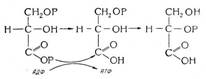
Биохимия спиртового брожения: Основу технологии получения пива составляет спиртовое брожение, - при котором сахар превращается...
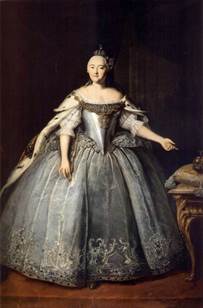
Историки об Елизавете Петровне: Елизавета попала между двумя встречными культурными течениями, воспитывалась среди новых европейских веяний и преданий...
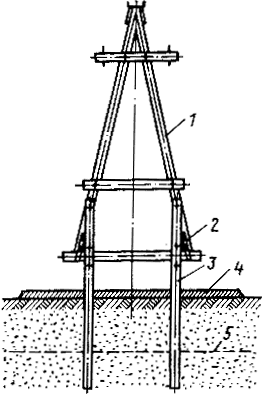
Особенности сооружения опор в сложных условиях: Сооружение ВЛ в районах с суровыми климатическими и тяжелыми геологическими условиями...
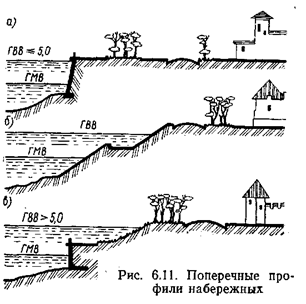
Поперечные профили набережных и береговой полосы: На городских территориях берегоукрепление проектируют с учетом технических и экономических требований, но особое значение придают эстетическим...
© cyberpediasu.com 2017-2026 - Не является автором материалов. Исключительное право сохранено за автором текста.
Если вы не хотите, чтобы данный материал был у нас на сайте, перейдите по ссылке: Нарушение авторских прав. Мы поможем в написании вашей работы!

